

Timing Belts
Timing belts are used to synchronize movement between components in mechanical systems. They ensure accurate and efficient power transmission for optimal performance.
-
-
Stock Drive Products Part Number A 6B 3-060037
BELT TMG 1/5P 3/8W 60T Urethane/Kevlar,12.0PL -
Applied Materials In Part Number 3080-01035
Belt Timing, .082 Pitch 1/8 wide, 90G, Alum. No-walk 7.344pd -
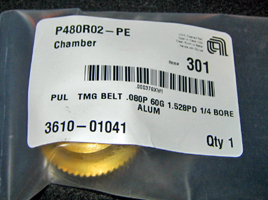
-
-
-
-
-
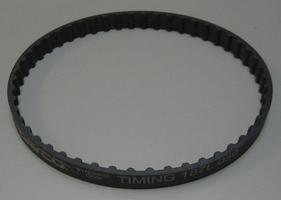
Dayco 187L050 Timing Belt Power Grip 18.7X 0.5
Dayco 187L050 Timing Belt Power Grip 18.7X 0.5 Timing Belt Power Grip 18.7X 0.5 -
Applied Materials In Part Number 3080-01006
Belt, Timing, .0816 Pitch 1/8 W, 77 tooth Polyurethane -
Applied Materials In Part Number 3080-01038
Belt,Timing .080 pitch 1/4"W, 90 tooth Urethane body -
Popular Manufacturers
Common Applications
synchronizing mechanical components
power transmission
industrial machinery
automation systems
Frequently Asked Questions
What are timing belts used for?
Timing belts are used for synchronizing the movement of mechanical components.
What materials are timing belts made from?
Timing belts are often made from materials like neoprene and urethane.
Can timing belts handle high-load applications?
Yes, timing belts are designed to handle high-load applications efficiently.
How to choose the right timing belt?
Consider the application's load requirements, belt material, and size specifications.
Log in with your username/email address