

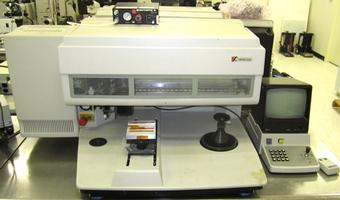
SEMICONDUCTOR EQUIPMENT CORP WAFER FILM FRAME TAPE APPLICATOR
Wafer Film Frame Tape Applicator
The item is sold AS IS without returns.
For parts or not working condition. It is not tested.
Die bonders are essential for attaching semiconductor dies to substrates with precision and stability. They enhance the reliability and efficiency of semiconductor assembly processes.
Wafer Film Frame Tape Applicator
The item is sold AS IS without returns.
For parts or not working condition. It is not tested.
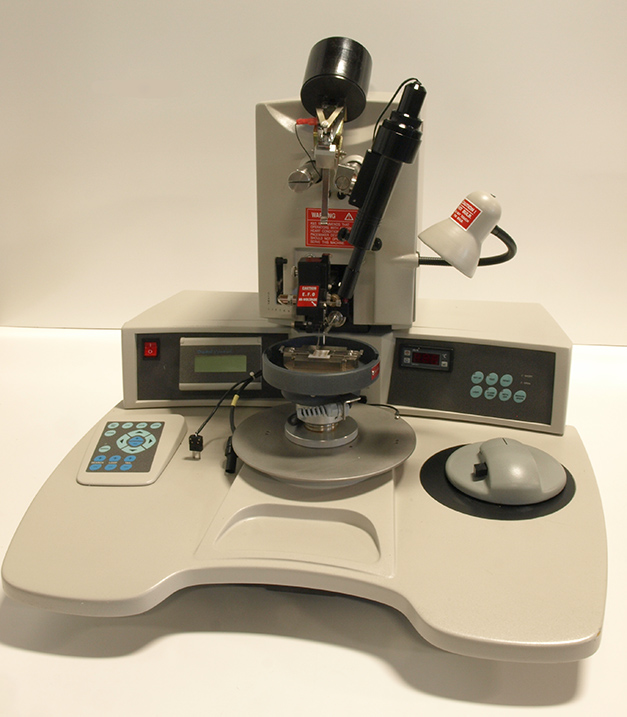
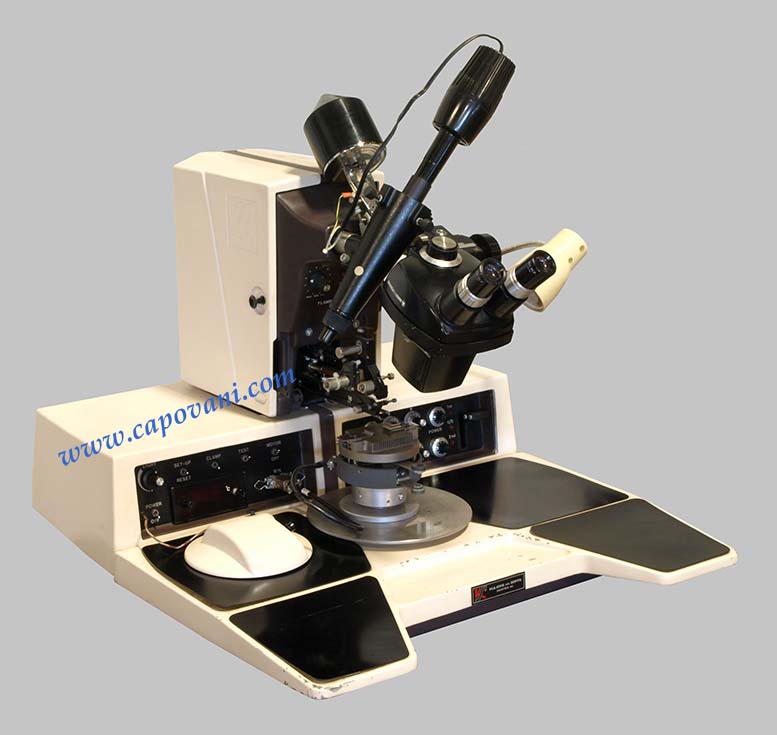
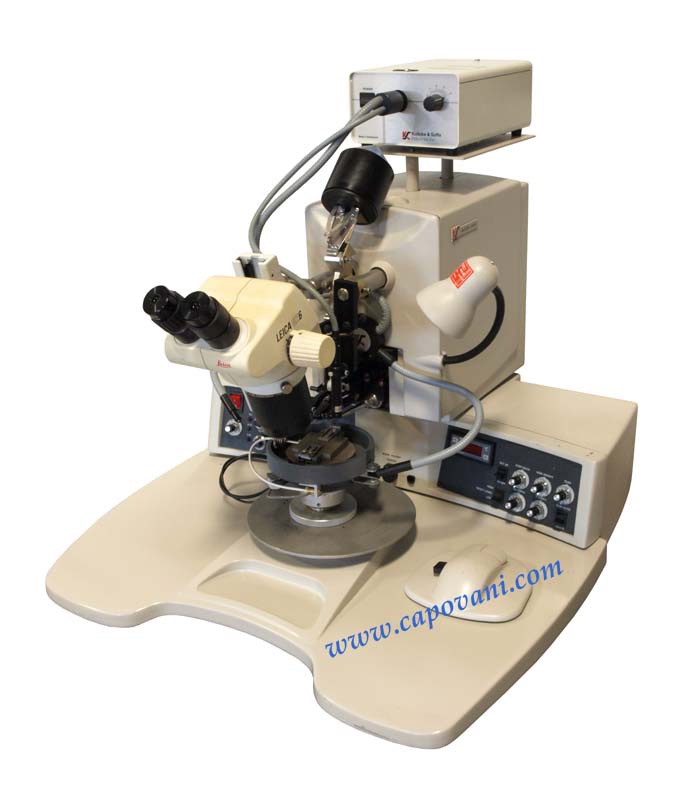
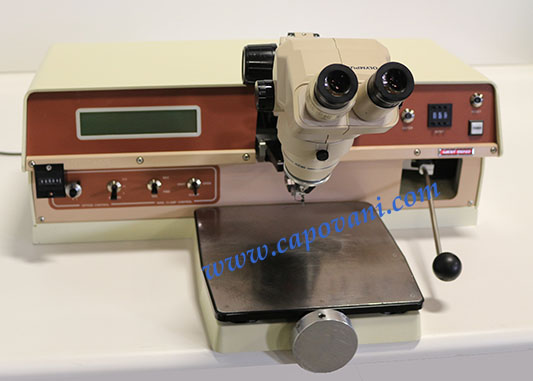
Manual Wedge Bonder with Leica GZ6 Microscope
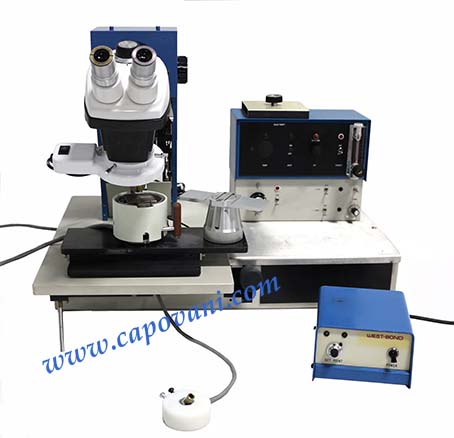
The Mech-El/MEI 709 is a manual eutectic die attacher. The machine comes with a 2 position slide table for die presentation and heated work holder. The MEI 709 uses a unique hot gas head that allows the user to heat the package to a temperature below the wetting temperature of the solder and use the hot gas to bring the localized heat to only the die area to wet the solder or perform.
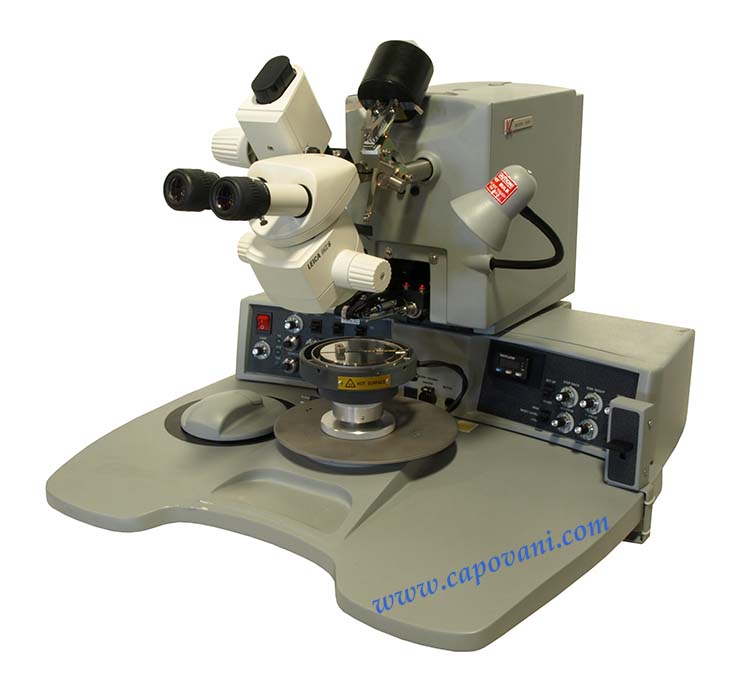
Manual Wedge Bonder with Leica MZ6 Microscope
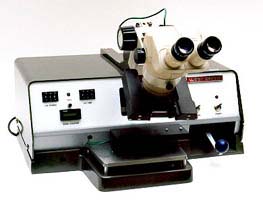
Ultrasonic Wedge Wire Bonder Designed to interconnect wire leads to semi-conductor, hybrid or microwave devices.Machine bonds insulated wire directly to thin film gold without the need to strip off insulation
Representative photo
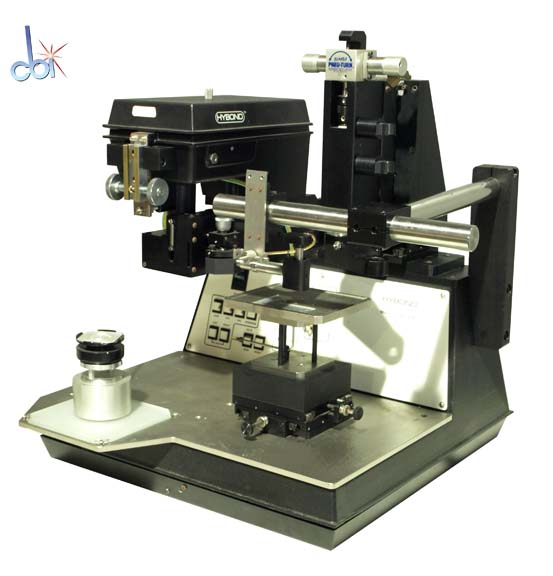
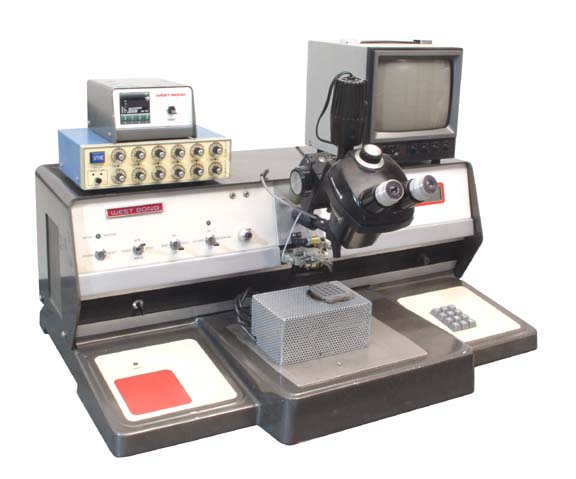
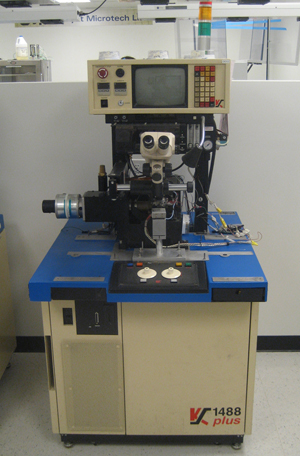
Automatic Wedge Bonder Designed for RF,microwave and high-lead count semiconductor devicesBonds ultrasonically or thermosonically
Log in with your username/email address