
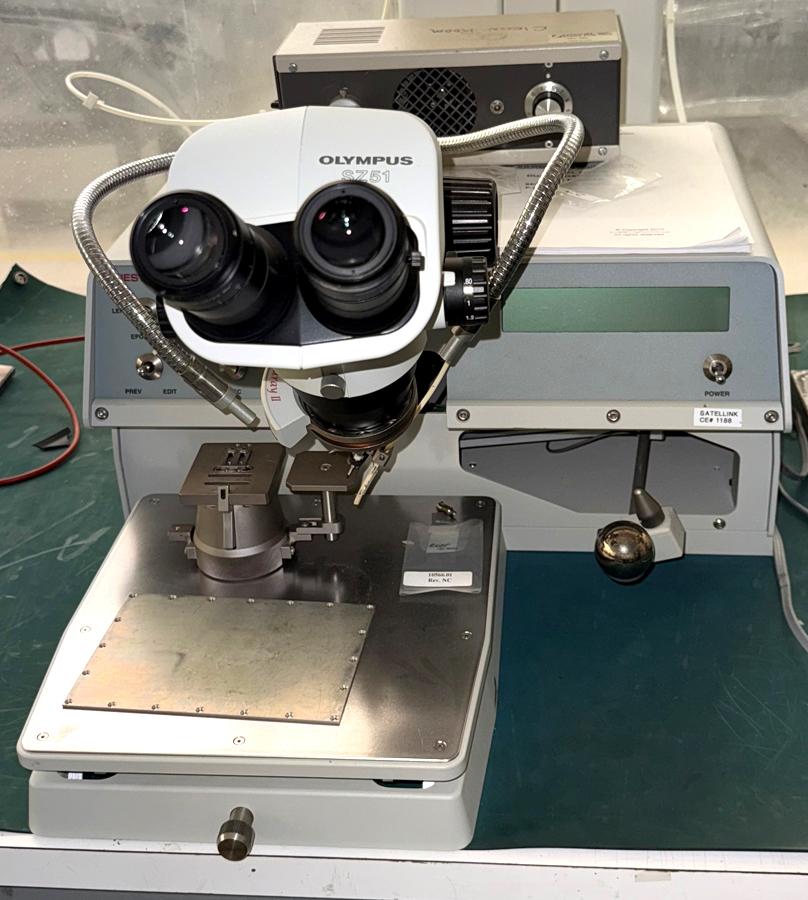
Manual Epoxy Die Bonders

Manual epoxy die bonders are precision tools used in the semiconductor packaging process to attach dies to substrates. They ensure high bonding accuracy and reliability in microelectronic assembly.

  1. West-Bond 7201CR-79 Dual Dispense Epoxy Die Bonder

    Manual Epoxy Die Bonders

    West-Bond 7201CR-79 Dual Dispense Epoxy Die Bonder

    West-Bond 7201CR-79 Dual Dispense Epoxy Die Bonder

    • Fully Programmable Microprocessor Controlled Epoxy Dispensing 
    • Manual X-Y-Z Movement
    • 0.001" Z Encoder Resolution
    • Dual Epoxy Reservoirs
    • 360° Rotating Vacuum Pickup Tool
    • Adjustable Height Work Platform
    • Olympus SZ51 Stereo Zoom Microscope
    • West-Bond Luxuray II LED Illuminator 

Common Applications

semiconductor packaging

microelectronic assembly

Buying Guide

Manual Epoxy Die Bonders Buying Guide

When selecting a manual epoxy die bonder from surplus listings, ensure that the equipment matches your specific semiconductor packaging needs.

Consider the following criteria to make an informed purchase:

  • Verify the bonder's compatibility with the substrates you intend to use.
  • Check the condition and functionality of the machine to ensure reliability.
  • Look for availability of manuals and documentation to assist with operation and maintenance.
  • Confirm calibration settings and inspect all components for wear and tear.

Frequently Asked Questions

What is a manual epoxy die bonder?
A manual epoxy die bonder is a tool used to attach semiconductor dies to substrates using epoxy resin, ensuring precision in microelectronic assembly.
How do you maintain a manual epoxy die bonder?
Regular maintenance includes cleaning the bonding area, checking alignment, and ensuring all mechanical parts are functional.
Why choose a surplus manual epoxy die bonder?
Surplus manual epoxy die bonders offer cost savings while still providing reliable performance for microelectronics packaging.
What should I consider when buying a surplus die bonder?
Check the bonder's condition, verify calibration, and ensure compatibility with your specific packaging needs.