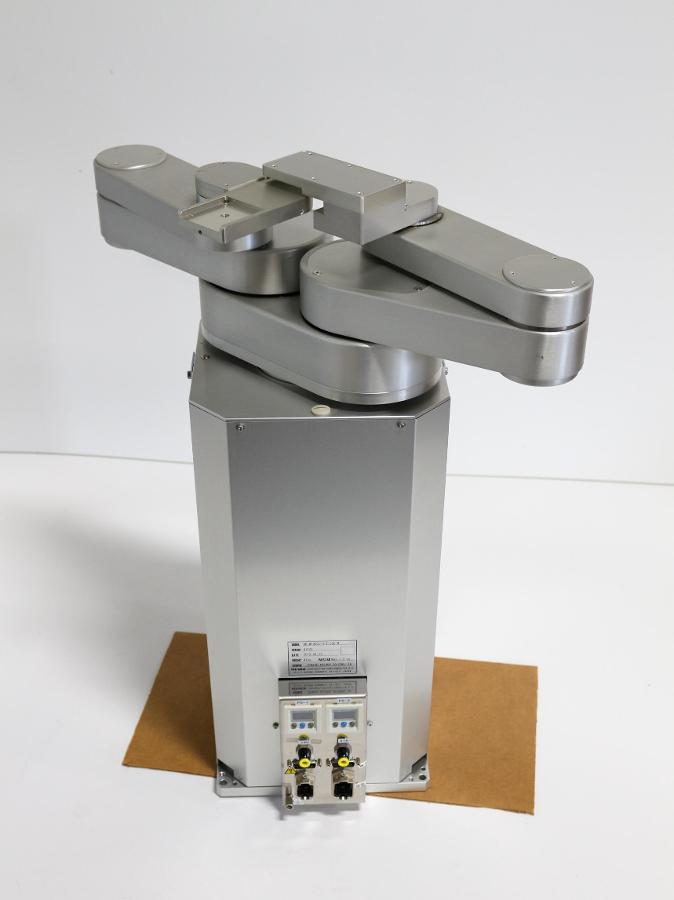
Industrial Robots

Industrial robots are automated machines designed to perform a variety of tasks in automated manufacturing. They enhance production efficiency, reliability, and precision in industrial operations.

  1. HIRATA TWIN ARM ATMOSPHERIC ROBOT

    Robots

    HIRATA TWIN ARM ATMOSPHERIC ROBOT

    Twin Arm Atmospheric Robot

  2. BROOKS AUTOMATION Multitran 5

    Robots

    BROOKS AUTOMATION Multitran 5

    3 Axis Robot, Rebuilt
  3. RORZE WAFER TRANSFER ROBOT WITH CONTROLLER

    Robots

    RORZE WAFER TRANSFER ROBOT WITH CONTROLLER

    Rorze Wafer Transfer Robot With Controller

    Robot and controller CURR-4326-1 are in used condition. 

    Sold AS IS, Without Return.

Common Applications

automated assembly

welding processes

material handling

pick and place tasks

packaging operations

inspection tasks

Buying Guide

Industrial Robots Buying Guide

Purchasing industrial robots requires careful consideration to ensure they fit your automation needs.

Evaluate the specific tasks you intend the robot to perform, and compare this with the capabilities of available surplus units.

  • Determine the robot's condition and any wear that may affect functionality.
  • Check for the availability of manuals and service records for maintenance insights.
  • Assess compatibility with your current systems and required interfacing components.
  • Consider if the robot can be easily reconfigured for different tasks or applications.

Frequently Asked Questions

What are industrial robots?
Industrial robots are automated machines used in manufacturing to perform tasks such as assembly, welding, and packaging.
How do industrial robots improve manufacturing?
They increase efficiency, precision, and can operate continuously without fatigue, reducing production costs.
Can surplus industrial robots be integrated into existing systems?
Yes, surplus robots can often be integrated into existing systems but may require modifications or new interfaces.
What should be considered when buying surplus robots?
Consider compatibility, condition, configuration, and available documentation and service history.